Shared with care: details simplified, no internal screens.
Context
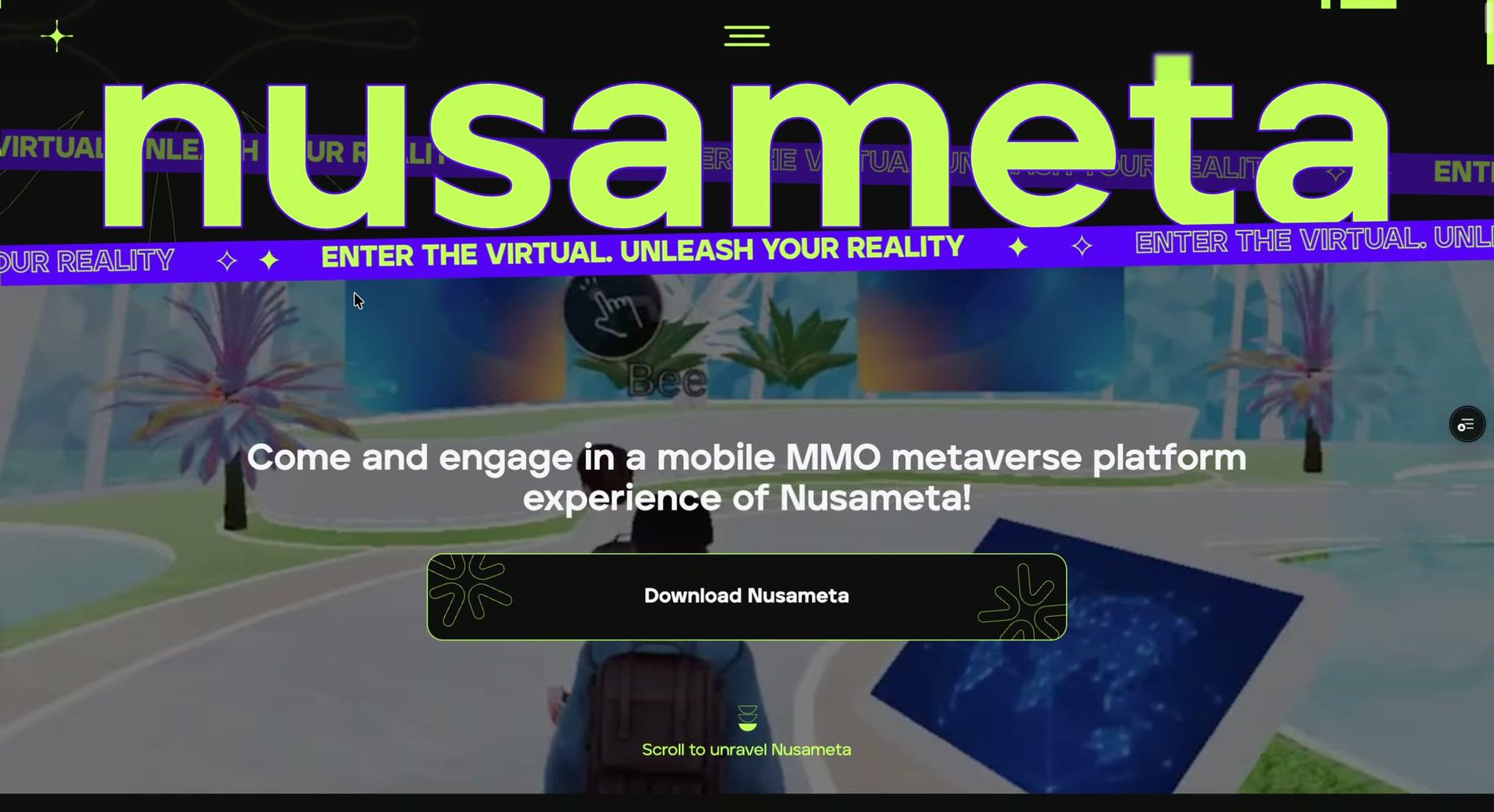
nusameta.io is the public site of Nusameta's mobile metaverse. I have built its front end since September 2023: first the platform's site, then, from April 2025, the company website on the same address. About 350 commits.
The problem
The home page carries a lot of motion: a hero video, scroll scenes in GSAP and Lottie animations. On a phone it had grown heavy. Twelve stylesheets blocked the first render, the production build still shipped the framework's development overlay, and about 4.7 MB of animation frames sat inside the JavaScript bundle.
Design decisions
The animation adapts to each visitor: its level follows the device's capability, the connection speed and the reduced-motion setting. On a phone the hero video shows its poster; it plays on desktop.
Any page or section can be switched on or off in the CMS (Strapi), so content can change without waiting for a release.
I cleaned up what assistive technology hears: the marquee's repeated copy is hidden from screen readers, so it is read once. I also tidied keyboard focus and the hero's animation.
How I built it
I built the home page from scratch in GSAP and Lottie, with a Lottie splash screen and scroll indicator. The pages share one library of reusable components, in atomic design.
I rewrote the animation code: one ScrollTrigger instance, animation on transforms only, and each timeline built just before its section comes into view. That cut long tasks and re-renders. GSAP, SplitType, Microsoft Clarity and Google Sign-In load only when a page needs them, and the Lottie files load by path with lottie_light instead of riding inside the bundle.
I integrated the services around it: content from Strapi through its REST API, event sign-up with Google Calendar (OAuth) or an .ics download, Google Sign-In, social sharing with Open Graph previews, YouTube video and Microsoft Clarity. Along the way the site moved to Next.js 15, Tailwind CSS 4 and Strapi 5.
A detail I care about
Dame, the avatar on the home page, changes outfits as you scroll, and the wardrobe comes out in a random order each time.
Results
On the home page, the framework's JavaScript went from 368 KB to 147 KB, 60% less. A phone now downloads about 3.4 MB less, and one section's 23 images went from 2.8 MB to 226 KB.
In Lighthouse's mobile test, the first content now appears in 1.25 s, down from 1.8 s.